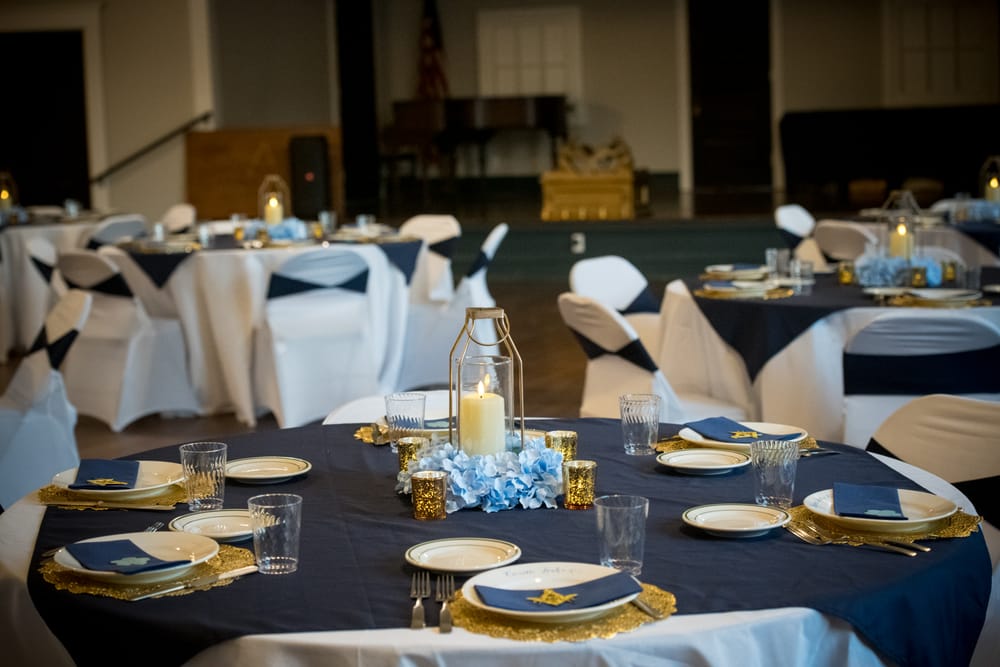
Somebody built the best room you were ever in, and it wasn't the person who arranged the chairs.
Think about the last time something real happened in a room. Not a productive meeting. A room where people showed up as themselves, the clock disappeared, and everyone left a little changed. That wasn't an accident. Someone held the standard for it, whether or not they had the title. In the Craft we call that person the Worshipful Master, and here's the part nobody tells you: the room he builds starts with him, not the furniture.
I read the Worshipful Master as the organizing center of leadership: the one who directs the work, holds the standard, and builds the space where a group functions as one thing instead of a pile of good intentions. Strip that function out and effort scatters, no matter how skilled the people are. He isn't the guy running the meeting. He's the architect of the conditions that make elevated work possible, and that architecture starts on the inside.
Leadership of self first
The sequence matters, and most leaders skip it. Before you can hold the standard for a group, you have to hold it for yourself. Before you can build a room where other people drop the noise of the day, you have to have dropped it yourself.
What you carry into the room is contagious. So the only question that governs this whole role is a blunt one you ask before you open the door: what state am I in, and what climate is it about to create for everyone else?
That's where the Preparing Room stops being ritual and becomes practice. In the lodge it's a literal place, where a candidate sheds the trappings of the outside world before he crosses in and gets ready for the work instead of starting it. For a leader it isn't a room at all. It's something you do every time you approach the threshold. Clean the desk before the session. Sit in silence for two minutes before you walk in. Decide, on purpose, what you're carrying in and what you're leaving on the far side of the door. The particular ritual barely matters. What matters is the line it draws: that was ordinary time, this is time set aside for work that counts.
There's a way to get this wrong. Call it the Perpetual Seeker: the guy who falls in love with the cleansing part and never gets to the work. He's got the candles, the playlist, the breathing routine, and nothing built. The Preparing Room is a threshold, not a destination. You cross it. If you're spending more energy getting ready to work than working, the ritual has quietly turned into avoidance wearing a robe.
Arrive present, regulated, ready. What that costs is different for everyone, and only you can know what it takes to cross your own threshold. The Master who doesn't know his own can't build one for anyone else.
The floor, not the ceiling
Once the interior threshold is crossed, attention turns to the room. Here's where the second mistake lives.
Almost everything written about the perfect work environment is about the ceiling: the ideal desk, the right light, the full ergonomic build-out. Chase the ceiling eventually. It's worse than useless if you never laid the floor, and you cannot start work from the ceiling. The floor is short: a clear surface, managed interruption, basic physical comfort. That's the whole list. The room has one job, to remove enough friction that the work can begin, and nothing beyond that.
Chip and Dan Heath noticed where leaders actually spend their attention: organizations pour their energy into filling potholes and almost none into building peaks. Same thing happens with a room. We engineer out every possible negative and never ask whether we've built any invitation to something better. A room with no friction and no invitation gives you work that's merely unobstructed. My job was never pothole removal. It's peak-building.
Which is why imperfect rooms produce extraordinary work all the time: the room was never doing the work, it was getting out of the way. Think of the fort you built as a kid, or the corner of the library where a few of you vanished into a project until somebody's mom showed up. Nobody engineered those. A clear enough surface, few enough interruptions, enough shared care, and the room simply receded. That's what a good room does. It disappears.
So once the floor exists, stop thinking about it. The workshop was never the goal; it's what the goal requires. The Master who spends the whole session fussing with the room has mistaken the container for the work. A room can't manufacture care. It can only leave a space where care has room to show up.
Engineering the threshold for a group
The group version is the hard version.
Working alone, you control every variable. Add other people and most of them stop being yours. Everybody walks in carrying whatever morning they had, whatever argument they just left, whatever is still buzzing in their pocket. Asking them to be present is a big ask. When a meeting dies before it starts, it almost always dies right here, because nobody built the ritual that lets everyone cross the threshold together.
The Lodge exists to solve exactly this. It's a bounded space, run by rules and roles and a fixed order, whose whole purpose is to separate ordinary life from purposeful work and hold attention to a higher standard than the street outside. It isn't where the work is done differently. It's where the conditions that permit different work are maintained.
My outward job is to set a stable climate, and climate is exactly the right word. It isn't the agenda and it isn't instruction. It's the feel of a room, registered before a single word of content lands. A group knows within minutes whether the room was held or abandoned, whether the next hour was designed or merely scheduled.
Good threshold design runs in order. The body comes first: temperature, water, a place to set their things down. Those aren't amenities, they're prerequisites, because you can't ask a mind to work while the body is still filing complaints. Then comes the divestiture point, the step everyone skips and the one that matters most: where people get permission and a mechanism to leave the outside world outside. A moment of silence, a short intention, a welcome that says what's about to happen and why it matters. Whatever the form, it sends one signal: that was out there, this is in here, and they are not the same.
In lodge the Tyler stands guard at the door and decides what gets in. He's the attention gate. In any group, I'm the Tyler for the whole room: through the conditions I set, I decide what it will admit and what it won't.
A lodge opening done with real presence does this exact work. Done as rote recitation to get to the business portion, it does nothing, and anyone who has sat through both has felt the difference in the air before a word of real work was spoken. There's research on why that opening carries so much freight. The same Heath brothers documented the peak-end rule: when people judge an experience afterward, they don't average it out. They remember the peaks and the transitions, and the rest goes blurry. Surveyed alumni put fully forty percent of their most vivid college memories in the first six weeks of freshman year. So the beginning gets remembered. Mark the transition on purpose. Don't leave it to fend for itself.
Skip that step and you're building on a surface nobody prepared. The stones sit there. The mortar's available. Nothing binds.
Play is the mindset that unlocks it
All of this, the interior work and the room and the group entry, serves one particular kind of work. Not efficient work. Work that has the quality of play.
Play needs pinning down before I lean on it, because here it doesn't mean easy or frivolous. It means coming at the work with curiosity instead of a death grip on the outcome. You loosen your hold on what the result has to be, so the process itself can move and teach you something. You're not measuring today against yesterday or your output against the person next to you. You're just in it.
Deci and Ryan gave decades to this: when people do a thing for its own sake instead of for a reward or to dodge failure, they're more creative, more persistent, and they produce better work. The outcome-first mindset most workplaces run on isn't neutral; it strangles the very engagement that does the best work. A man who recites the ritual for the hundredth time with the same rote memory he brought the first time has never learned it. The memorization is the outcome focus. The transmission is the play. And the room takes its cue from me: if I'm managing the experience, they'll manage it, and if I'm in it, they can enter it.
Being on the level
Everything so far, the personal threshold and the floor and the group entry and the play, is infrastructure for one moment: when the managing stops and the being starts.
The Craft has a name for it. Being on the level. Not as a metaphor for fairness, but as a description of an operating state. Everyone in the room is working at the same depth of engagement. Nothing above it, nothing below it. There is only the work, on the level.
This is the flow state Mihaly Csikszentmihalyi tracked across every field he studied: self-consciousness dissolves, the gap between the worker and the work closes, an afternoon passes like ten minutes. Masonic ritual points at the same thing when it speaks of sublime silence, work so absorbed that the noise of the outside world stops getting through. The temple in Jerusalem, the ritual reminds us, was raised without the sound of a metal tool. The silence isn't the absence of sound. It's the presence of total attention.
You can't force that state. You can only permit it. That's the whole argument: everything the Master does is an act of permission. I can't manufacture the surrender. I can only clear the obstacles in front of it. And when it comes, it brings a certain steadiness, the release of both the itch to hurry and the worry about what comes next. The work is enough.
I don't do this for the group. I do it with them. The leader who built the space isn't absent from it; he's more present than anyone, because he understood before the doors opened what the work was going to ask.
The work, step by step
- Cross your own threshold first. Build a short preparing-room practice before any session that matters. Name what you're carrying in and what you're leaving at the door. Spending more time here than on the work? Simplify it.
- Lay the floor, not the ceiling. Clear surface, managed interruption, physical needs met. Build the minimum and stop thinking about it. The room's job is to get out of the way.
- For groups, engineer the entry. Give people somewhere to set things down, literally and otherwise. The divestiture point, a silence, an intention, an opening done with real presence, is not optional. Skip it and the group spends the first thirty minutes doing it unconsciously anyway.
- Name what the space is for. Is this Lodge work, needing a bounded standard? Preparing-Room work, where readiness comes before entry? Or work for the open world, where circumstance is the testing ground? Name the space and you govern it. Fail to, and it governs you.
- Model the play. Bring visible curiosity and loosen your grip on the outcome enough to let the work move. The room follows whoever set the standard.
- Drop the management and enter the work. The infrastructure is built, the threshold crossed, the group present. Stop engineering the experience and become part of it. The whole thing was built for this. Go in.
The inside job
I don't produce the work. I produce the conditions under which the work becomes something more than a task ticked off.
That's leadership stripped to the bone: build the space where people can do what they couldn't do without it, and hold the standard that keeps the space worth entering. The outside architecture, the room and the threshold and the ritual, can't be pried apart from the inside one. The man who never prepared himself can't prepare the room.
Done right, people remember it long after the agenda is forgotten. Not what got accomplished, but what it felt like to be fully present and working on the level together, because the space was held well enough that something true could come out.
So stop waiting for the perfect room. Pick the next session that matters, cross your own threshold before you walk in, and build the smallest space that lets the work begin.
That's the art of the start. And it is always, first, an inside job.
Bibliography
Amabile, Teresa M. Creativity in Context. Boulder, CO: Westview Press, 1996.
Csikszentmihalyi, Mihaly. Flow: The Psychology of Optimal Experience. New York: Harper & Row, 1990.
Deci, Edward L., and Richard M. Ryan. Intrinsic Motivation and Self-Determination in Human Behavior. New York: Plenum, 1985.
Heath, Chip, and Dan Heath. The Power of Moments: Why Certain Experiences Have Extraordinary Impact. New York: Simon & Schuster, 2017.
Newport, Cal. Deep Work: Rules for Focused Success in a Distracted World. New York: Grand Central Publishing, 2016.
Mattocks, Brian. A Mason's Work: Reclaiming Operative Fraternalism Through Symbolic Self-Development. A Mason's Work Press, 2026. (Further reading — the Worshipful Master as the architect of the conditions for elevated work.)
Related Podcast Episodes
- The Minimum Viable Environment
- The Art of the Start (For Groups)
- Craft Your Lodge Experience
